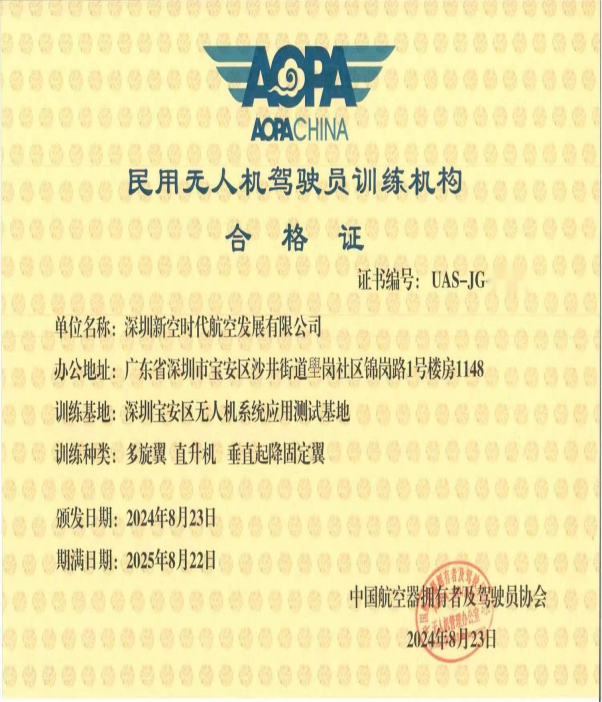
Civil Aviation Administration of china
CAAC UAV License Training

Civil Aviation Administration of china
CAAC UAV License Training
China Flying Hand Network UAV Employment Platform
Feishou.com offers a variety of drone job recruitment services, including job requirements, salary and benefits, etc;
Establish a communication bridge between Feishou and enterprises: Build a communication bridge between Feishou and enterprises through the platform, promote cooperation between both parties, and achieve win-win results.
China Flying Hand Network UAV Employment Platform
Feishou.com offers a variety of drone job recruitment services, including job requirements, salary and benefits, etc;
Establish a communication bridge between Feishou and enterprises: Build a communication bridge between Feishou and enterprises through the platform, promote cooperation between both parties, and achieve win-win results.
NEW ERA UAV TRAINING
NEW ERA UAV TRAINING
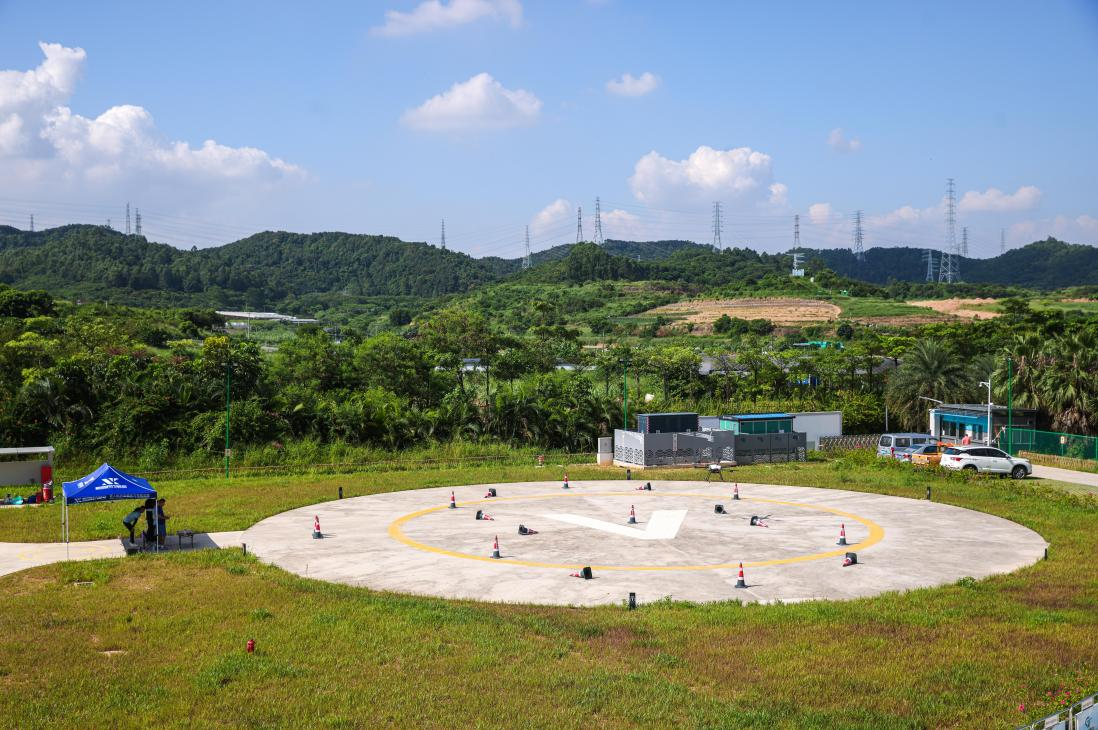
Xinkong Era Company is a solution provider dedicated to creating comprehensive solutions for the drone industry. We focus on training high-end unmanned aerial systems, drone sales, and multi scenario application services. Shenzhen Xinkong Era has all kinds of relevant documents available, strictly following industry standards and conducting all business in a legal and compliant manner. Whether it is the basic licenses required for business operations or the qualification certificates related to specific businesses, this is a solid guarantee for our lawful operation and steady development. The drone service business includes (training, cargo, route planning, route flight, and empty flight) training mainstream aircraft types, including (multi rotor drones, helicopter drones, vertical takeoff and landing fixed wing drones).
Teaching Staff Team
New Aerospace Era has a team of hundreds of instructors and doctoral research and development teams specializing in unmanned aerial vehicles, with rich teaching experience, understanding the learning characteristics and needs of students, and being able to adopt effective teaching methods and means, such as case teaching, practical operation guidance, etc., to improve students' learning effectiveness and skill mastery, and cultivate high-quality unmanned aerial vehicle professionals.

Facilities and Equipment
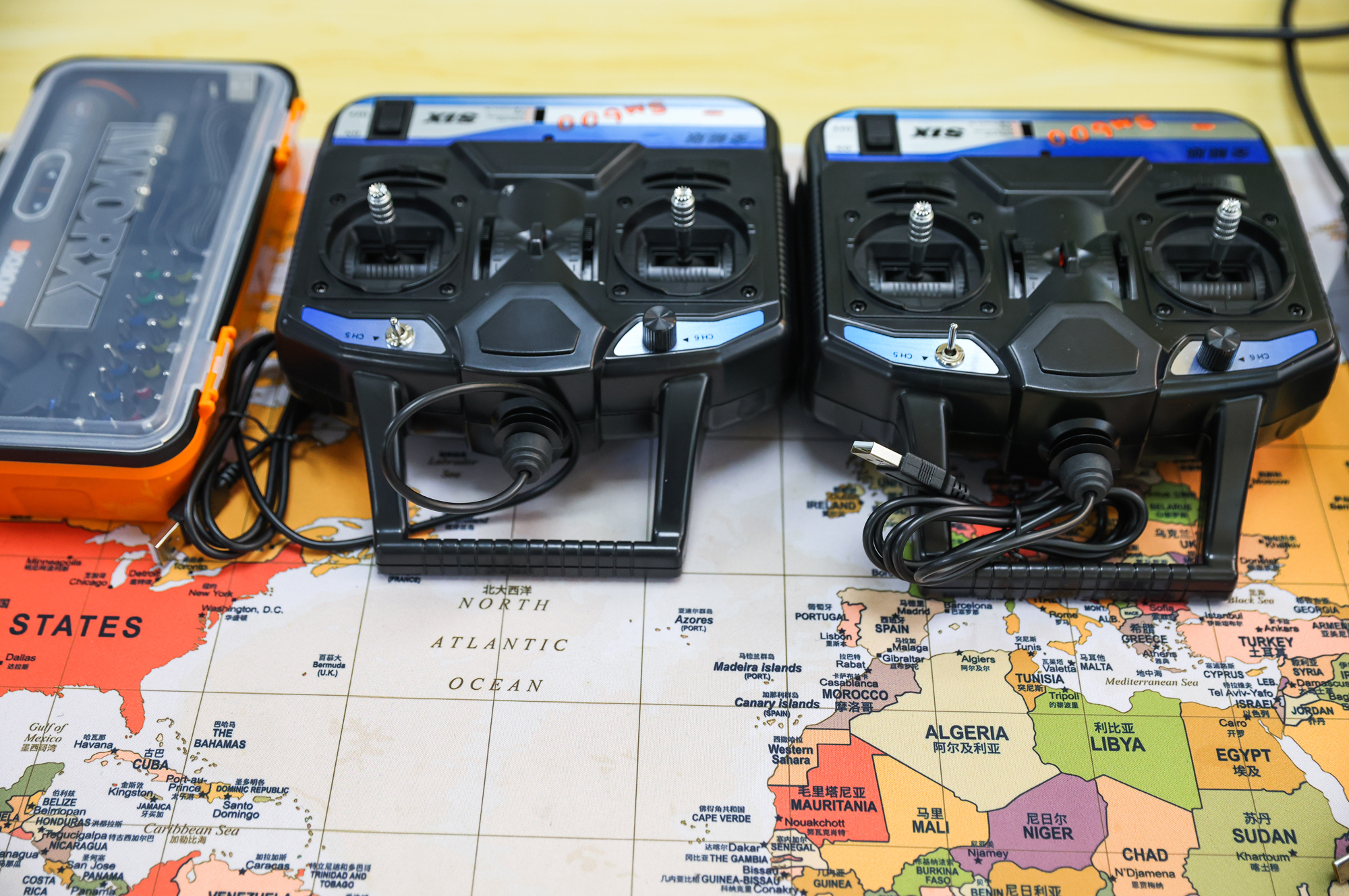
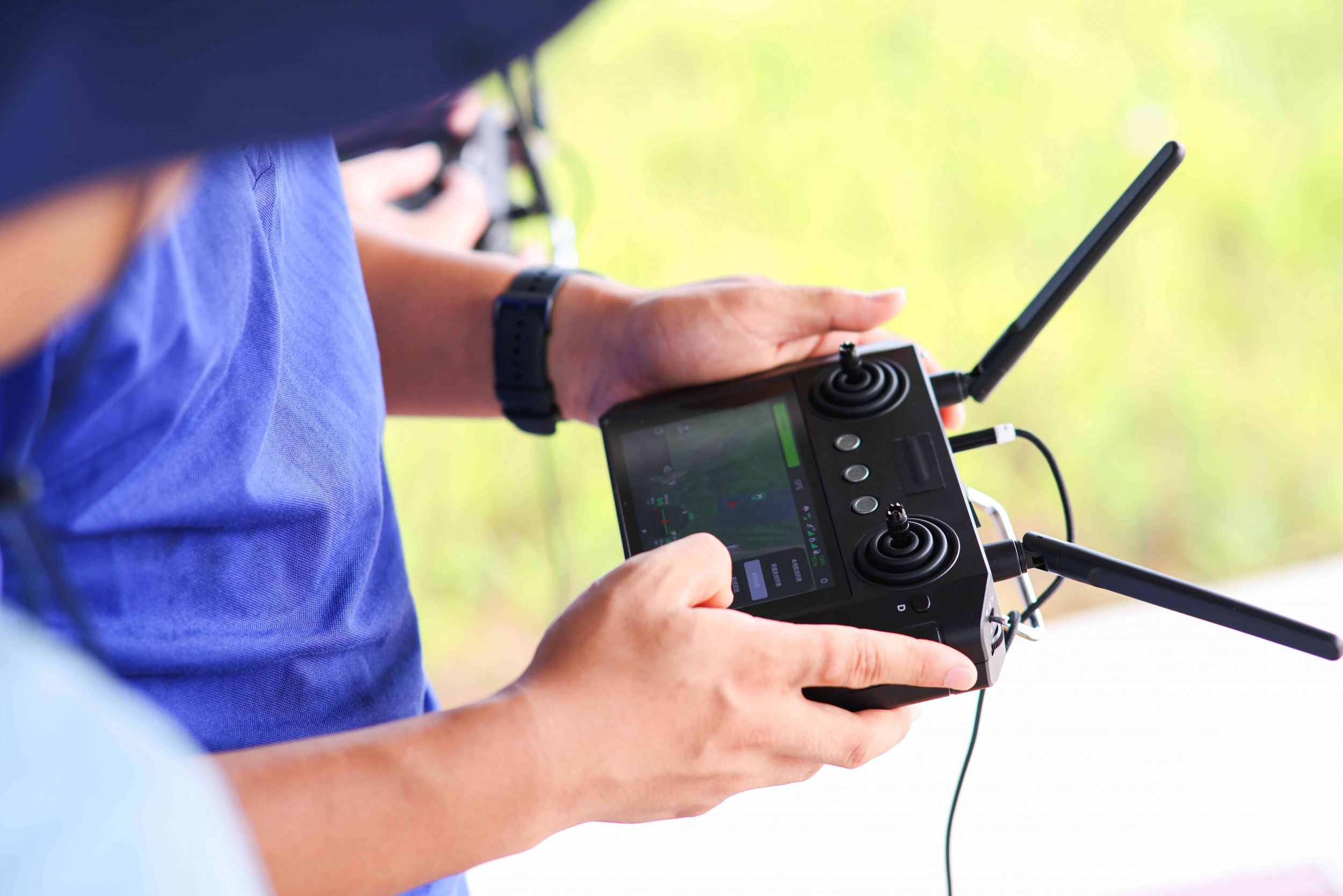
The new aviation era has multiple types of trainer aircraft and multiple computer simulators, making it easier for beginners to quickly understand flight. The simulator teaching method provides a zero risk learning environment for beginners, which can clearly demonstrate the flight principles of drones. By simulating various physical phenomena during flight, such as aerodynamic principles and force balance, we will use simulators in the early stages of training. In addition to simulating basic flight movements, we will also conduct practical simulations in multiple scenarios, such as logistics, power inspection, lifting, plant protection, flight training, power inspection, and crossing aircraft. In the process of practical training, industry application exercises are conducted in stages, such as aerial photography of a certain building, lifting of course standard boxes, and other exercises, in order to lay a solid theoretical foundation for practical operation, and to be more adept at making rapid progress in subsequent physical teaching and training.

Teaching Model
I adopt a 1+6 teaching mode, where one teacher is responsible for leading six students. In this mode, teachers can have a more comprehensive understanding of each student's learning characteristics, strengths, and weaknesses, ensuring that each student can achieve maximum improvement in the learning process. If there are individual students with poor actual learning abilities, they can receive specialized training and guidance. Our student teacher ratio is relatively small, and classroom interaction is more frequent and in-depth. Students have more opportunities to ask questions, speak, and participate in discussions, actively expressing their views and ideas. Provide students with a comfortable and better learning experience.

One Stop Service
A professional team will carefully plan your certification path, from registration consultation to preparation guidance, from exam arrangements to certificate issuance, every step will be meticulous, rigorous and responsible. Familiar with the requirements and standards for obtaining certificates for various types of drones.
We will provide every student with high-quality learning resources, including authoritative textbooks, accurate simulation questions, and experienced instructors, so that they can study diligently without being distracted during the preparation process. Continuously improving your knowledge and skills through learning, laying a solid foundation for a smooth certification process.

Teaching Staff Team
New Aerospace Era has a team of hundreds of instructors and doctoral research and development teams specializing in unmanned aerial vehicles, with rich teaching experience, understanding the learning characteristics and needs of students, and being able to adopt effective teaching methods and means, such as case teaching, practical operation guidance, etc., to improve students' learning effectiveness and skill mastery, and cultivate high-quality unmanned aerial vehicle professionals.
Facilities and Equipment
The new aviation era has multiple types of trainer aircraft and multiple computer simulators, making it easier for beginners to quickly understand flight. The simulator teaching method provides a zero risk learning environment for beginners, which can clearly demonstrate the flight principles of drones. By simulating various physical phenomena during flight, such as aerodynamic principles and force balance, we will use simulators in the early stages of training. In addition to simulating basic flight movements, we will also conduct practical simulations in multiple scenarios, such as logistics, power inspection, lifting, plant protection, flight training, power inspection, and crossing aircraft. In the process of practical training, industry application exercises are conducted in stages, such as aerial photography of a certain building, lifting of course standard boxes, and other exercises, in order to lay a solid theoretical foundation for practical operation, and to be more adept at making rapid progress in subsequent physical teaching and training.
Teaching Model
I adopt a 1+6 teaching mode, where one teacher is responsible for leading six students. In this mode, teachers can have a more comprehensive understanding of each student's learning characteristics, strengths, and weaknesses, ensuring that each student can achieve maximum improvement in the learning process. If there are individual students with poor actual learning abilities, they can receive specialized training and guidance. Our student teacher ratio is relatively small, and classroom interaction is more frequent and in-depth. Students have more opportunities to ask questions, speak, and participate in discussions, actively expressing their views and ideas. Provide students with a comfortable and better learning experience.
One Stop Service
A professional team will carefully plan your certification path, from registration consultation to preparation guidance, from exam arrangements to certificate issuance, every step will be meticulous, rigorous and responsible. Familiar with the requirements and standards for obtaining certificates for various types of drones.
We will provide every student with high-quality learning resources, including authoritative textbooks, accurate simulation questions, and experienced instructors, so that they can study diligently without being distracted during the preparation process. Continuously improving your knowledge and skills through learning, laying a solid foundation for a smooth certification process.
UAV CATEGORY STANDARDS AND EXAMINATION RULES
Classification of UAV levels
| Grade Classification | Empty Weight(kg) | Takeoff Full Weight(kg) | Notes |
| I | 0<W≤0.25 | MAV | |
| II | 0.25<W≤4 | 1.5<W≤7 | Light UAV |
| III | 4<W≤15 | 7<W≤25 | Minicomputer license can drive above |
| IV | 15<W≤116 | 25<W≤150 | Medium aircraft license can drive above |
| V | Plant Protection UAV | ||
| XI | 116<W≤5700 | 150<W≤5700 | Mainframe license can drive above |
| XII | W>5700 | ||
UAV Identification Level
| Driver | Use a wireless remote control to control the drone within a visible distance of 500 meters. |
| VLOS:Visual Line of Sight | |
| Aircraft Commander |
Beyond a visible range of 500 meters, execute tasks on ultra long range unmanned aerial vehicles through GPS, satellite navigation, and data monitoring ground stations. |
| BVLOS:Beyond VLOS | |
| Authorized Instructor |
Drone instructors authorized by national regulations can teach inexperienced students drone flight training for two professional levels: drone pilot and captain. |
PREV
NEXT
Exam Rules
|
Theoretical Exam: 100 questions, with an exam time of 120 minutes. The exam content includes laws and regulations, principles of unmanned aerial vehicles, meteorological knowledge, etc. Within line of sight, a score of 70 or above is required to be qualified, while beyond line of sight, a score of 80 or above is required to be qualified. Comprehensive Q&A: The entire drone system will randomly select 10 questions and pass with a score of 7 or above. |
Real Flight Exam: It is divided into two parts: 360 degree in place self suspension and horizontal Bazi. If it is a beyond visual range pilot, it is also necessary to test ground base station control flight, route planning, attitude mode, and blind flight return. (Ground station exam items are limited to 6 minutes) |
PREV
NEXT
无人机类别标准及考试规则
UAV CATEGORY STANDARDS AND EXAMINATION RULES
Classification of UAV Levels
| Grade Classification | Empty Weight(kg) | Takeoff Full Weight(kg) | Notes |
| I | 0<W≤0.25 | MAV | |
| II | 0.25<W≤4 | 1.5<W≤7 | Light UAV |
| III | 4<W≤15 | 7<W≤25 | Minicomputer license can drive above |
| IV | 15<W≤116 | 25<W≤150 | Medium aircraft license can drive above |
| V | Plant Protection UAV | ||
| XI | 116<W≤5700 | 150<W≤5700 | Mainframe license can drive above |
| XII | W>5700 | ||
UAV Identification Level
| Driver | Use a wireless remote control to control the drone within a visible distance of 500 meters |
| VLOS:Visual Line of Sight | |
| Aircraft Commander |
Beyond a visible range of 500 meters, execute tasks on ultra long range unmanned aerial vehicles through GPS, satellite navigation, and data monitoring ground stations. |
| BVLOS:Beyond VLOS | |
| Authorized Instructor |
Drone instructors authorized by national regulations can teach inexperienced students drone flight training for two professional levels: drone pilot and captain. |
PREV
NEXT
Exam Rules
|
Theoretical Exam: 100 questions, with an exam time of 120 minutes. The exam content includes laws and regulations, principles of unmanned aerial vehicles, meteorological knowledge, etc. Within line of sight, a score of 70 or above is required to be qualified, while beyond line of sight, a score of 80 or above is required to be qualified. Comprehensive Q&A: The entire drone system will randomly select 10 questions and pass with a score of 7 or above. |
|
Real Flight Exam: It is divided into two parts: 360 degree in place self suspension and horizontal Bazi. If it is a beyond visual range pilot, it is also necessary to test ground base station control flight, route planning, attitude mode, and blind flight return. (Ground station exam items are limited to 6 minutes) |
PREV
NEXT
TRAINING COURSE
TRAINING COURSE

Registration Requirements
1. At least 16 years old, under 60 years old, holding an ID card;
2. Comply with laws and regulations, engage in unethical behavior, and have no criminal record within three years;
3. Physical requirements: Visual acuity correction of 1.0 or above, no color blindness, color weakness, infectious diseases, cardiovascular and cerebrovascular diseases, mental illnesses, and other diseases that hinder safe flight.
You Can Contact Us Through The Following Ways
Tel:+86 15626786131
Email:info@xinkongshidai.com
Add:4th Floor, Building 9, Blue Future Technology Park Phase II, Dachan Bay, Haoye Community, Xixiang Street, Bao'an District, Shenzhen


Telephone
+86 15626786131
PREV
NEXT
Tel:+86 15626786131
Copyright © Shenzhen Xinkong Era Aviation Development Co., Ltd Guangdong ICP No. 2024329696-1
Copyright © Shenzhen Xinkong Era Aviation Development Co., Ltd Guangdong ICP No. 2024329696-1

 中文
中文
 English